The short answer: In-store retail media campaigns for CPG brands deliver an average 14% incremental lift in sales, 4.7x ROAS when closed-loop measurement is in place, and ad recall rates significantly above digital alternatives. The longer answer involves understanding why the industry has historically struggled to prove these numbers — and why that is changing fast in 2026.
This article compiles the most current published data on in-store retail media performance, explains the metrics that actually matter for budget allocation decisions, and outlines what FMCG brands and grocery retailers should expect when evaluating shopping cart advertising and other in-store digital formats.
The Core ROI Numbers: What Research Shows
14% Incremental Sales Lift — The CPG Benchmark
The most comprehensive published benchmark for in-store retail media comes from a meta-analysis conducted by Grocery TV, covering 16 incremental sales lift studies across CPG categories including confection, snacks, gum and produce. The result: CPG brands advertising on in-store digital networks achieve an average 14% incremental lift in sales above baseline.
The significance of this figure is methodological, not just numerical. Incremental lift — measured by comparing sales in stores where ads run against matched control stores without ads — isolates the causal effect of the advertising. It filters out sales that would have happened regardless. A 14% incremental lift is not 14% of attributed sales; it is 14% of sales that would not have occurred without the in-store campaign.
For a FMCG brand with strong baseline velocity in a grocery chain, a 14% incremental lift represents meaningful revenue directly attributable to in-store media investment.
4.7x ROAS With Closed-Loop Attribution
When in-store retail media is connected to first-party transaction data — meaning a retailer can trace an ad exposure to a verified purchase by the same shopper — ROAS benchmarks rise substantially. Early data from closed-loop in-store measurement systems launched in 2025 shows brands achieving an average 4.7x ROAS, meaning $4.70 in revenue per $1 spent on in-store media.
For context: the average ecommerce ROAS across platforms in 2026 sits at approximately 2.87x (Hawky AI benchmark data). In-store retail media with closed-loop attribution outperforms the cross-platform digital average by a significant margin when measurement infrastructure is in place.
The critical qualifier is “closed-loop.” In-store media without direct transaction linkage generates much weaker ROAS figures because attributed sales rely on panel data, survey responses, or modeled estimates rather than actual purchase records. The gap between closed-loop and modeled attribution is where most of the historical uncertainty around in-store ROI originates.
154% Average Return on Retail Media Investment
A broader view of retail media investment — including in-store activations — shows some companies achieving approximately 154% return for every $1 spent on retail media campaigns, according to Oliver Wyman analysis. This figure incorporates the precision targeting advantage of first-party loyalty data combined with point-of-purchase proximity, two structural advantages that in-store retail media holds over digital alternatives.
Why In-Store Outperforms Digital on Key Metrics
Ad Recall: 70–80% for In-Store vs. Digital Benchmarks
Between 70 and 80% of consumers exposed to in-store advertising recall noticing it, according to the Retail Advertising Landscape report published by IAB Canada (October 2024). Digital screens within the store show slightly stronger memorability than other in-store formats. By comparison, digital display advertising recall rates are typically measured in single digits for non-targeted placements.
A separate digital signage meta-analysis places the overall ad recall rate for in-store digital screens at 83% — significantly higher than traditional advertising methods. The same research shows that digital in-store signage produces a 55% higher ad recall rate among shoppers compared to other retail advertising formats.
The mechanism is proximity and context. A shopper in front of a product category is attending to that category. An ad delivered at that moment — on a cart screen, at shelf level, or on an endcap display — lands in a moment of active decision-making, not passive media consumption.
Unplanned Purchase Influence
72% of shoppers report making unplanned purchases based on in-store messaging, according to research from Avery Dennison’s Vestcom (reported in Progressive Grocer, 2026). This is the primary reason new-to-category trial rates are higher for in-store media than for digital: the shopper is physically present, with a basket, at the moment they encounter the promotional message.
A separate study found that 1 in 5 customers makes an unplanned purchase after seeing items featured on in-store digital screens (Eclipse Digital Media). For FMCG brands whose primary growth challenge is category penetration — getting first-time buyers to try the product — this figure is directly relevant to how in-store media should be evaluated against other channels.
3x New Product Trial Rate vs. Digital
In-store marketing is three times more likely than digital advertising to influence new product trial (Vestcom, as reported by Progressive Grocer, February 2026). This is one of the most significant differentiators between in-store and digital retail media, because new-to-category trial is among the most expensive and difficult objectives in FMCG marketing.
Digital advertising can build awareness efficiently. It cannot replicate the moment when a shopper who just saw a promoted product reaches out and picks it up from the shelf. In-store retail media — particularly formats that travel with the shopper, such as cart screen displays — operates precisely at that moment.
Purchase Decision Influence at Point of Sale
74% of customers report that digital signage influenced their purchase decisions in retail stores (AIScreen, 2025 Digital Signage report). 83% of retailers reported improved customer engagement through interactive digital displays. These figures reflect the fundamental advantage of in-store media: it operates at the point of sale, where purchase decisions are being made, not in the attention economy outside the store where the distance to purchase is measured in hours, days, or weeks.
The Measurement Problem — and Why It’s Being Solved in 2026
Despite consistently strong performance data, in-store retail media has historically received less than 1% of retail media advertising budgets, even though over 95% of food and beverage spending happens in physical stores (eMarketer, November 2024). The disconnect is not effectiveness — it is measurement confidence.
What “Proving Incrementality” Actually Means
36% of marketers identified difficulty proving investment incrementality as a top challenge that could lead to decreased investment in retail media, according to the 2025 State of Retail Media report from Skai. An additional 44% expressed concerns about the accuracy and reliability of their incrementality results.
The problem is structural: until retailers build infrastructure that connects in-store ad exposure to individual transaction records, the causal chain between “shopper saw an ad” and “shopper bought the product” requires estimation rather than measurement. Estimation creates uncertainty. Uncertainty creates hesitation in budget allocation.
This is changing. In January 2026, Albertsons Media Collective launched matched market incrementality measurement — a framework that compares sales performance in stores with active in-store media against rigorously selected control stores without media exposure. The solution uses nearly 60 variables to reduce bias and works across national store formats.
Mondelēz was a launch partner. Melissa Pitmon, customer director for omnichannel at Mondelēz, described the result directly: “Albertsons Media Collective’s matched market measurement gave us clear, causal insight into how in-store media drove incremental sales, helping us optimize with confidence and validate the true impact of our investment.”
This is the measurement standard the industry has been working toward. It is operational now at scale for the first time.
The iROAS Range: 253% to 1,609%
Recent experiments measuring incremental ROAS (iROAS) across retail media advertisers show a wide performance range: from 253% to 1,609%, according to data compiled by Dataslayer. This range reflects differences in category, campaign objective, targeting precision, and — critically — whether the measurement captures true incrementality or relies on attributed sales that include organic conversions.
The benchmark for strong incremental performance is an iROAS above 2.0 (200%). This means that for every $1 spent on in-store media, at least $2 in revenue should be attributable to shopper behavior that would not have occurred without the ad exposure. Campaigns delivering iROAS below 1.0 are largely capturing organic demand — sales that would have happened regardless.
Understanding this distinction matters for FMCG brands evaluating in-store retail media. A campaign with a high ROAS but low iROAS is spending money to reach shoppers who were already going to buy. A campaign with a moderate ROAS and high iROAS is creating new buying occasions. The latter is worth more for most FMCG growth objectives.
The Shopper Behavior Context: Why the Physical Store Still Dominates
ROI metrics for in-store retail media make more sense when placed against the underlying shopping behavior data.
76% of purchases still happen in person in 2026 (Rockbot Retail Media Trends, March 2026). 85% of grocery visits still occur in physical stores (GroupM Year Ahead in OOH, 2025). Despite over a decade of e-commerce growth, the grocery store remains where the vast majority of FMCG buying decisions are made and executed.
Yet 90% of retail media advertising remains online (eMarketer, November 2024) — and for food and beverage specifically, the figure exceeds 99%. This is not because online retail media is more effective for grocery categories. It is because online retail media has been measurable — reliably, comparably, at scale — for longer.
As in-store measurement infrastructure catches up, the expectation is that budget allocation will shift. Standardizing full-funnel measurement for in-store retail media could accelerate industry investment by 40%, according to analysis from Skai and the Path to Purchase Institute (2025 State of Retail Media Report). The infrastructure is now being built by major retailers. The budget realignment is expected to follow.
How to Evaluate Shopping Cart Advertising ROI Specifically
Shopping cart advertising — digital displays mounted on cart handles — occupies a specific position within the in-store retail media ecosystem that affects how ROI should be assessed.
Impressions Per Shopper vs. Impressions Per Placement
A wall-mounted digital screen generates impressions based on how many shoppers pass within view distance. A cart-mounted display generates impressions for the duration of the shopper’s entire visit — typically 30 to 50 minutes in a grocery store. The exposure model is fundamentally different: one screen, one shopper, continuous contact throughout the shopping journey.
This has direct implications for recall and influence rates. The 70–80% ad recall benchmark for in-store advertising is derived from general in-store media exposure. Cart-mounted displays, by the nature of the shopper relationship with the cart, produce extended exposure that supports higher message frequency within a single trip.
Zone-Based Content and Purchase Influence
Cart advertising systems that deliver zone-aware content — meaning the message on the screen changes based on where in the store the cart is currently located — amplify the relevance of each impression. A shopper in the beverage aisle who sees a beverage promotion is not encountering a generic ad; they are encountering a message at the exact moment of category consideration.
This zone-to-purchase proximity is what makes cart advertising particularly relevant for the “new product trial” objective. The three-times effectiveness advantage of in-store media over digital for new product trial is amplified further when the ad is delivered at the category level, not just at the store level.
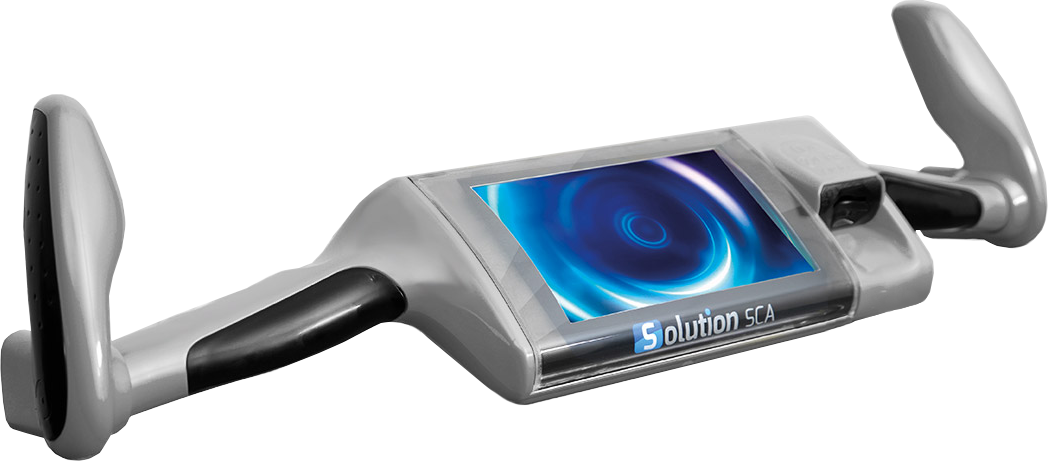
Solution SCA’s Clever system (formerly One To One), deployed across retail chains in Poland, Sweden, Austria, and Andorra, applies this principle at scale — delivering zone-specific content to individual cart screens based on real-time location within the store, managed centrally through the Immensus CMS platform.
What Data to Require From In-Store Cart Advertising Partners
FMCG brands evaluating cart advertising programs should request:
Impressions methodology — How are impressions counted? Is it based on cart motion, estimated store traffic, or individual shopper sessions? The definition affects comparability with other in-store formats.
Recall data — Has the network commissioned independent brand lift or ad recall studies? Published benchmarks are valuable; proprietary network data without methodology disclosure is harder to validate.
Incremental sales measurement — Does the network offer closed-loop measurement connecting ad exposure to transaction data? If not, what methodology is used to estimate sales lift — panel surveys, matched market comparison, or sales correlation?
Category-level performance — What is the published or available performance data for your specific product category? Results vary significantly between impulse categories and planned-purchase categories.
Key Data Summary: In-Store Retail Media ROI Benchmarks (2026)
| Metric | Benchmark | Source |
| Average incremental sales lift (CPG) | 14% | Grocery TV meta-analysis, 16 studies |
| Average ROAS (closed-loop measurement) | 4.7x | Grocery TV, 2025 |
| Average retail media return (broad) | 154% per $1 spent | Oliver Wyman |
| iROAS range across advertisers | 253%–1,609% | Dataslayer experiment data |
| In-store ad recall rate | 70–80% | IAB Canada Retail Advertising Landscape, Oct 2024 |
| Digital in-store screen recall rate | 83% | AIScreen Digital Signage meta-analysis |
| Shoppers reporting unplanned purchases from in-store messaging | 72% | Vestcom / Avery Dennison |
| In-store vs digital: new product trial effectiveness | 3x higher | Vestcom / Progressive Grocer |
| Shoppers saying digital signage influenced purchase decision | 74% | AIScreen |
| Retail media 50% more effective than social for driving action | 50% | PubMatic |
| In-store share of food & beverage spending | 95%+ | eMarketer |
| In-store share of retail media advertising budgets | <1% | eMarketer November 2024 |
| Purchases still happening in person (2026) | 76% | Rockbot |
Note: Smart cart display systems such as Clever by Solution SCA (MAGO Group) represent the most direct application of these metrics — delivering continuous, zone-aware impressions across the full shopping journey rather than at fixed screen locations.
Frequently Asked Questions: In-Store Retail Media ROI
What is the average ROI of in-store retail media for FMCG brands?
Based on published research through 2025–2026, FMCG brands advertising on in-store digital networks achieve an average 14% incremental sales lift (Grocery TV meta-analysis). When closed-loop measurement is in place connecting ad exposure to transaction data, average ROAS reaches 4.7x — meaning $4.70 in revenue per $1 spent. Broader retail media ROI estimates show some companies achieving approximately 154% return per $1 invested, reflecting the value of first-party shopper data combined with point-of-purchase placement.
How does in-store retail media ROI compare to digital advertising?
The average ecommerce ROAS across platforms in 2026 is approximately 2.87x. In-store retail media with closed-loop attribution benchmarks at 4.7x — a substantially higher return. For ad recall specifically, in-store digital advertising produces recall rates of 70–83%, while standard digital display ads typically register in low single digits without strong creative or targeting. In-store media is also 3x more likely to influence new product trial and 50% more effective than social media at driving post-ad action (PubMatic).
What is incremental sales lift and why does it matter for in-store advertising?
Incremental sales lift measures the additional sales generated by an advertising campaign above what would have happened organically — without the ad. It uses controlled comparisons (matched stores or shopper cohorts with and without ad exposure) to isolate the causal effect of the campaign. Standard ROAS can include sales that would have occurred anyway; incremental lift cannot. For in-store retail media, incremental lift is the most accurate measure of whether the advertising created new buying occasions rather than simply reaching shoppers already planning to purchase.
Why is in-store retail media still underfunded if the ROI data is this strong?
The gap between in-store media effectiveness and budget allocation is driven by measurement confidence, not performance. Over 99% of retail media budgets for food and beverage remain online despite more than 95% of spending happening in-store. Brands allocate to channels where they can measure causal lift with standardized, comparable methods — which online retail media has offered for longer. As in-store incrementality measurement infrastructure matures (Albertsons’ matched market framework launched January 2026 is a significant milestone), budget allocation is expected to shift toward in-store channels. Analysts estimate that full-funnel measurement standardization could accelerate in-store retail media investment by 40%.
What measurement should I require from an in-store retail media vendor?
Request closed-loop measurement connecting ad exposure to individual transaction records, or a matched market incrementality methodology comparing sales in exposed vs. control stores. Avoid vendors whose performance claims rely solely on impression counts or proprietary attribution models without disclosed methodology. Require category-specific performance data, not just network averages. The Albertsons Media Collective matched market framework (January 2026) represents the current gold standard for in-store incrementality measurement — use it as a benchmark when evaluating other network claims.
Does in-store retail media work equally well for all FMCG categories?
No. Categories with strong impulse purchase behavior and high new-to-category trial objectives — snacks, beverages, seasonal items, new product launches — consistently show higher incremental lift from in-store retail media than categories dominated by brand-loyal, planned-purchase behavior. The Grocery TV meta-analysis covering confection, gum, snacks, and produce supports this pattern. For planned-purchase categories with high brand loyalty, in-store media may drive lower incremental lift but can still deliver value for share-of-occasion and competitive conquest objectives.
What is the difference between ROAS and iROAS in retail media measurement?
ROAS (Return on Ad Spend) measures total attributed revenue divided by ad spend. It includes sales that would have happened organically. iROAS (Incremental ROAS) measures only the revenue that would not have occurred without the advertising — the true causal effect. In retail media, the gap between ROAS and iROAS can be substantial: a campaign with 5x ROAS might have a 1.5x iROAS if most of those sales were from shoppers who were already planning to buy. iROAS above 2.0 is considered strong incremental performance. The published range for retail media experiments runs from 253% to 1,609%, reflecting significant variation across campaigns, categories, and measurement approaches.