In-store retail media is the fastest-growing segment of advertising in 2026 — and most grocery chains are still leaving the majority of its value on the table. This guide covers what in-store retail media is, why it outperforms digital-only campaigns, how grocery retailers and FMCG brands are deploying it right now, and what separates strategies that drive measurable ROI from those that don’t.
What Is In-Store Retail Media?
In-store retail media is advertising delivered inside a physical retail environment — on digital screens, smart cart displays, shelf-edge units, audio systems, or mobile apps activated at the point of purchase. Unlike online retail media (sponsored listings on retailer websites or apps), in-store retail media reaches shoppers in the physical store, at the exact moment they are selecting products.
The channel sits at the intersection of two powerful forces: the persistent dominance of physical retail and the precision of data-driven advertising. Despite the growth of e-commerce, 76% of purchases still happen in person in 2026, according to Rockbot’s Retail Media Trends report. Yet as of late 2024, over 99% of retail media advertising budgets remained allocated to online channels (eMarketer). This gap between where buying actually happens and where brands are advertising is the central opportunity in in-store retail media today.
Why In-Store Retail Media Is Growing in 2026
Retail media as a whole is no longer experimental. It is now a top-three advertising channel globally, alongside search and social media — and in-store is emerging as its fastest-growing frontier.
Key figures that define the market right now:
- Global retail media spend is forecast to exceed $200 billion in 2026 (Adtelligent/eMarketer)
- In-store media is expected to reach $580 million in the U.S. alone in 2026, representing 33.1% growth year-over-year (eMarketer, December 2025 forecast)
- Europe’s retail media spend is projected to reach €31 billion by 2028, nearly doubling in three years, with grocery-led networks driving much of that growth
- Retail media grew 17.6% year-over-year in 2025, reaching 15.4% of global digital ad spend (eMarketer H1 2025)
- In-store marketing is three times more likely than digital ads to influence new product trial, according to research from Avery Dennison’s Vestcom
- 72% of shoppers report making unplanned purchases based on in-store messaging (Vestcom/Progressive Grocer, 2026)
According to a January 2026 report from Coresight Research, 2026 marks a critical inflection point for in-store retail media: retailers are expanding it through deeper partnerships with signage and content platforms, and using AI to tailor messages to real-time traffic and shopper behavior.
Why Brands Are Shifting Budgets In-Store
Three structural shifts are accelerating in-store retail media adoption in 2026:
First-party data scarcity elsewhere. As third-party cookies have phased out and privacy regulations have tightened, retailers’ purchase history data — who bought what, when, and how often — has become the most valuable targeting signal available. No social or search platform has access to this level of behavioral data.
Closed-loop attribution. Grocery retailers can link an ad exposure at the shelf or on a cart screen directly to a basket-level purchase within the same trip. This closes the loop that traditional advertising never could. Brands allocating more to in-store consistently cite measurement confidence as the primary driver.
Measurement standardization is catching up. Albertsons Media Collective announced matched market incrementality measurement in January 2026, comparing sales performance in test stores against control stores. The gap between in-store media effectiveness and advertiser confidence in measuring it is finally closing.
How In-Store Retail Media Works: Core Formats
Modern in-store retail media is not a single technology — it is an ecosystem of formats, each serving a different moment in the shopper journey.
Digital Screens and Smart Cart Displays
Digital screen networks positioned throughout the store — at aisle entrances, in frozen sections, near high-traffic endcaps — deliver dynamic content that updates based on inventory levels, time of day, local weather, or promotional calendars. Brands no longer need to manage static planograms; content can be updated in real time from a central platform.
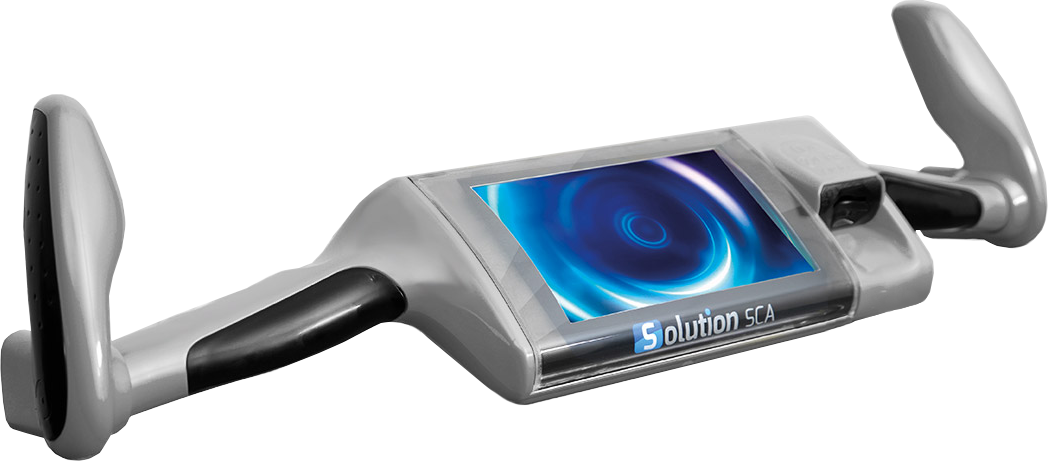
Smart cart displays represent the most direct-to-shopper application of this format. Screens mounted on shopping carts follow the shopper through the entire store visit, enabling zone-based content delivery — meaning a shopper entering the dairy aisle sees a message different from what they saw in the snack aisle three minutes earlier. This location-aware approach is one of the highest-engagement formats in in-store retail media, because it reaches shoppers at the moment of category consideration, not just at the entrance or checkout.
Solution SCA’s Clever system (formerly One To One, now part of the MAGO Group) is the most widely deployed commercial implementation of this format in Europe. Active installations include SPAR markets in Austria, retail chains in Sweden (including the Barkarby location with 225 active units), E.Leclerc in Poland and Andorra, with FCC and ISED certification secured for North American expansion. The system operates on a JOS (Just One Socket) principle — a single power socket per store runs the entire cart network, with no infrastructure modifications required.
Shelf-Edge and Digital Shelf Labels
Electronic shelf labels (ESLs) are evolving from price-update tools into media surfaces. Brands can activate promotional content at the exact product location, timed to coincide with competitor out-of-stock situations, traffic peaks, or loyalty segment visits.
Audio
In-store audio — messages integrated into background music programming — reaches every shopper in the store simultaneously, including those not looking at screens. Combined with time-based or zone-based triggers, audio can reinforce shelf-level and cart-level messaging at scale.
App-Based and Loyalty-Linked Activations
Grocery loyalty programs in the U.S. now cover over 70% of consumers. These programs allow retailers to serve personalized in-store messages through their mobile apps — triggered by geofencing, aisle proximity, or real-time basket composition — while linking the exposure directly to the loyalty ID for closed-loop measurement.
In-Store Retail Media for Grocery Chains: What Retailers Need to Know
For grocery retailers, building an in-store retail media network (RMN) is not simply an advertising opportunity — it is a structural shift in how the store generates revenue.
New Revenue Stream with High Margins
Retail media advertising revenue carries significantly higher margins than traditional grocery margin. A store selling floor space and ad inventory to a brand generates income that doesn’t require inventory management, logistics, or markdown risk. This is why retailers from Kroger to Carrefour to Hy-Vee are accelerating screen rollouts across locations.
The Infrastructure Question
The critical decision for grocery chains entering in-store retail media is infrastructure ownership versus partnership. Building proprietary screen networks and content management systems requires capital investment and technical capability. Alternatively, retailers can deploy turnkey solutions that include hardware, software, content management, and brand campaign connectivity from a single provider.
The market has moved toward integrated systems that connect online and in-store experiences, replacing siloed setups where digital campaigns and in-store campaigns ran on separate tracks. The retailers accelerating fastest in 2026 are those who have unified their data, measurement, and campaign management across both surfaces.
Measurement Is the Moat
The grocery chains that will command the highest FMCG advertising budgets by 2027 are the ones building measurement infrastructure now. Independent verification — not self-reported metrics — is what brands increasingly require before committing budget. Retailers that can demonstrate incremental sales lift from in-store placements, at the trip and basket level, are already converting that capability into premium CPMs.
In-Store Retail Media for FMCG Brands: Where to Start
For FMCG brands, in-store retail media is no longer optional in 2026. The channel offers something that online retail media cannot: reach at the physical moment of truth.
Align Placement to the Shopper Journey
The most effective in-store retail media strategies map content to the shopper’s movement through the store. Awareness formats (endcap screens, entrance displays) serve top-of-funnel objectives. Zone-specific formats (cart screens, shelf-edge activations) serve mid-funnel consideration. Checkout-area formats serve impulse and cross-sell.
Brands that treat in-store as a single-format channel — placing the same creative on every surface — consistently underperform against those that sequence content across the journey.
Use First-Party Data for Targeting, Not Just Context
The defining advantage of grocery retail media over other in-store advertising (such as traditional DOOH) is access to first-party shopper data. Campaigns that leverage loyalty-linked targeting — reaching shoppers who have purchased a competitor product in the last 30 days, or households with children under 10 — consistently outperform broad demographic targeting on both awareness and conversion metrics.
Measure Incrementality, Not Just Impressions
The industry shift in 2025–2026 is away from impression counts and toward incremental lift measurement. FMCG brands should require incrementality data — ideally matched market or exposed-vs-unexposed methodologies — before evaluating in-store campaigns. CPMs and reach figures without a sales lift component are insufficient for budget allocation decisions.
Start with the Categories That Win In-Store
Not every category performs equally in in-store retail media. The highest-performing categories are those where the purchase decision is made in the store (impulse categories, new product launches, seasonal items) rather than pre-committed purchases where the shopper enters already decided. In-store retail media excels at new-to-category trial — which aligns directly with one of FMCG brands’ most expensive and difficult objectives.
The Role of AI in In-Store Retail Media
Artificial intelligence is reshaping in-store retail media at every layer of the stack in 2026. According to Mars United’s 2026 Retail Media assessment, AI is delivering 6x better ROI than older optimization methods and reducing creative production timelines from weeks to days.
The primary AI applications in in-store retail media are:
- Dynamic content optimization: Automatically selecting which creative to display based on real-time signals (foot traffic density, weather, inventory levels, time of day)
- Audience sequencing: Identifying which loyalty segments are currently in-store and serving relevant messages to those profiles across cart screens or app notifications
- Measurement automation: Matching in-store ad exposures to basket data and generating incrementality reports without manual data processing
- Creative personalization: Generating localized or segment-specific ad variations at scale, eliminating the production bottleneck that historically limited campaign volume
By 2026, retailers expanding in-store media through deeper partnerships with signage and content platforms are using AI to tailor messages to real-time traffic and shopper behavior — a capability that was aspirational two years ago and is now operational across major grocery chains in the U.S. and Europe.
Key Challenges in In-Store Retail Media
Understanding where the channel still has friction helps brands and retailers allocate resources correctly.
Measurement fragmentation. Despite progress, in-store retail media measurement remains less standardized than online retail media. Different retailers use different incrementality methodologies, making cross-retailer comparison difficult. IAB Europe published Retail Media Measurement Standards in 2024, and industry adoption is ongoing — but not yet complete.
Scale and reach. Even though 85% of grocery visits happen in physical stores, in-store retail media budgets remain a fraction of total retail media spend. This gap is closing, but brands planning large-reach campaigns still need to layer in-store with online retail media, not treat it as a standalone channel.
Content management complexity. Running dynamic, zone-based content across hundreds or thousands of store locations requires robust content management infrastructure. Brands and retailers underestimating the operational layer of in-store media frequently encounter campaign delivery failures and attribution gaps.
Frequently Asked Questions: In-Store Retail Media for Grocery and FMCG
What is the difference between in-store retail media and traditional point-of-purchase advertising?
Traditional point-of-purchase advertising — static shelf talkers, floor decals, printed endcap displays — is fixed, non-personalized, and untrackable. In-store retail media refers to digital, data-connected advertising formats that can be updated in real time, targeted to specific shopper segments, and linked to actual purchase data for measurement. The core distinction is measurability and personalization at scale.
What is a realistic ROI for in-store retail media campaigns?
ROI varies significantly by category, format, retailer, and targeting approach. Industry data from 2025–2026 shows that in-store marketing is three times more likely than digital ads to influence new product trial (Vestcom), and that AI-optimized in-store campaigns deliver up to 6x better ROI than non-optimized equivalents (Mars United). Brands should benchmark against matched-market incrementality data from their specific retail partners rather than relying on industry averages.
What formats are most effective for grocery in-store retail media?
For new product launches and top-of-funnel awareness, zone-based digital screens (including shopping cart displays) perform strongly because they reach shoppers during the store visit rather than at a single fixed location. For conversion and basket-size objectives, shelf-edge activations combined with loyalty-linked app notifications tend to deliver the highest measured lift.
How does in-store retail media targeting work without third-party cookies?
Grocery retail media targeting is built on first-party loyalty data — purchase history, frequency, basket composition, and demographic information provided directly by shoppers when enrolling in loyalty programs. This data is not dependent on cookies or cross-site tracking, making it more durable and privacy-compliant than most digital advertising alternatives. Grocery loyalty programs in the U.S. now cover over 70% of consumers, giving retailers a substantial addressable audience.
How do small and mid-sized grocery chains participate in in-store retail media without building their own ad tech?
Most grocery chains in 2026 deploy in-store retail media through turnkey technology partnerships rather than proprietary development. These partnerships provide the screen hardware, content management software, campaign scheduling, and measurement infrastructure. The retailer’s role is to provide the store network and first-party shopper data; the technology partner handles the advertising operations layer. Providers such as Solution SCA (MAGO Group) offer end-to-end cart media deployment — hardware, the Immensus CMS platform, campaign management, and analytics — under a rental model that requires no capital investment from the retailer. This model significantly reduces the capital and technical overhead required to launch a retail media network.
Is in-store retail media only relevant for large-format grocery stores?
No. While large-format grocery chains have led adoption, in-store retail media is expanding into convenience retail, drug chains, and specialty grocery. In convenience retail, leading operators report loyalty participation at or above 50% of transactions — sufficient scale for meaningful data-driven targeting. The formats best suited to smaller store footprints differ (cart screens are less relevant in c-stores, while audio and digital shelf-edge are more applicable), but the core business model — connecting shopper data to brand advertising budgets — applies across store types.
What should FMCG brands prioritize when starting with in-store retail media?
Start with retailers where you have the most complete first-party data relationship — meaning where your products have the longest purchase history and where the retailer has the most developed measurement infrastructure. Run incrementality-measured pilots before scaling budget. Prioritize formats that align with your specific objective: new-to-category trial requires different placement than loyalty reinforce or competitor conquest. And ensure your creative is built for the in-store context — messages that work on a cart screen during a 45-minute shopping trip are not the same as messages designed for a 30-second pre-roll on YouTube.
In-store retail media is the channel where physical retail recovers its structural advantage over e-commerce: the ability to reach a buyer in the store, surrounded by the products they are actively choosing between, with a message that is relevant to that specific moment. The brands and retailers that build that capability in 2026 will hold a durable advantage as the channel matures.